


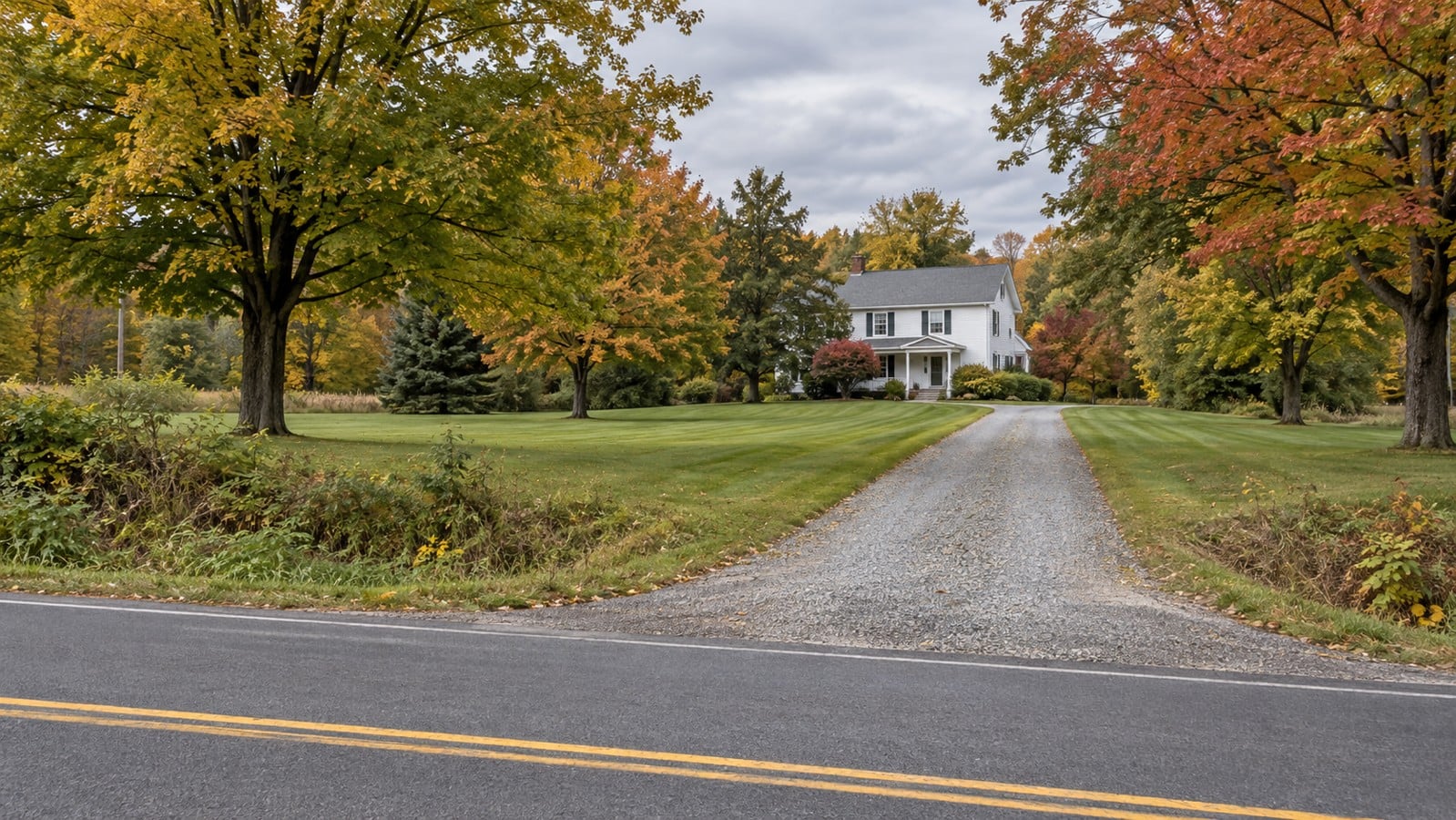
Hero image: AI-generated illustration, not a specific property or an example of approved access.
A rural Central New York home may have the yard and garage you want, yet the entrance from the road deserves its own look. If your plan depends on widening the driveway, adding another entrance or changing how vehicles reach the property, settle the access questions before treating those changes as part of the purchase.
For a home with access from an Onondaga County road, the county transportation department provides a useful starting point. Its published process distinguishes a new driveway from work within the existing road right of way. That distinction can change which questions you need answered before estimating a project.
Start with the address and the road authority
Write down the property address, parcel or tax-map number if available, municipality, and road name. Confirm who administers the road rather than assuming that a mailing address answers the question. The Onondaga County process described here is for county roads; it is not a statewide rule for every driveway.
Ask the appropriate department about the specific entrance and proposed work. A seller’s description of a convenient second access point is a reason to investigate, not confirmation that you can build or use it as planned.
A new entrance needs more than room on the lot
Onondaga County’s access-permit instructions say that all new driveways on county roads require an access permit, including residential, commercial, agricultural, construction and temporary drives.
The instructions call for marking the front property corners and proposed driveway center. The department then evaluates the proposed location. Sight distance and drainage are part of that process; the preferred location may not meet the requirements. The county also states that the applicant is responsible for locating the driveway on their property and satisfying local property-line offset requirements.
For a buyer, the practical question is not simply, “Could a truck fit here?” It is, “Has the entrance I am relying on been evaluated for the use I have in mind?” Do not choose a purchase budget around an unconfirmed entrance location.
Existing driveway work is a separate conversation
The county’s instructions identify driveway modifications—including widening or repaving within the road right of way—as work addressed through its Work in the Right of Way application. They also ask for a plan or sketch showing the proposed work relative to the road center.
That does not mean every improvement everywhere on a parcel follows an identical process. Describe where the work would occur and confirm the applicable requirements with the responsible authority. A contractor’s estimate should reflect the actual location and scope, not just the visible paved area.
Bring an access worksheet to the showing
Use this blank worksheet for each home. It is a planning aid, not a record of completed permit checks.
| Question | What to record |
|---|---|
| Which entrance would you use? | Mark the current entrance and any proposed change on your notes. |
| Who administers the road? | Department name and the person who confirmed the jurisdiction. |
| What is your intended project? | Widening, resurfacing, a new entrance, or no change. |
| What records are available? | Existing permits, survey and seller-provided information. |
| What still needs an answer? | Location, drainage, visibility, property lines and application requirements. |
Keep winter upkeep separate from permit status. Ask who currently clears the driveway, where snow is placed and whether any shared approach has a written maintenance arrangement. Have appropriate professionals examine private-access rights and agreements. Do not assume an entrance permit answers those ownership or maintenance questions.
Compare the homes you can actually use
The useful comparison is between each property’s existing access and your real plans. One home may already suit your vehicles and daily routine. Another may require a project whose scope, permission and cost are still uncertain. Keep those uncertainties visible when comparing the asking prices.
Contact the Procopio Team or call (315) 350-0571 to build a Central New York property shortlist around the access and outdoor space you need.
By Frank Procopio.